

• Skip to main content
  • Skip to footer

Pradip Bhattacharya

Indologist, Mahabharata scholar

  • BOOKS
    • MAHABHARATA
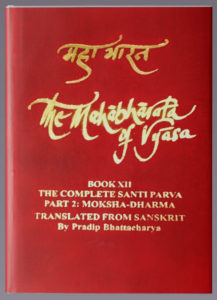
      • The Mahabharata of Vyasa – Moksha Dharma Parva
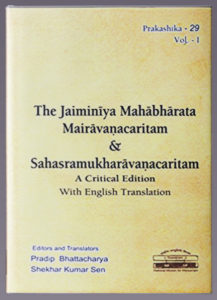
      • The Jaiminiya Mahabharata
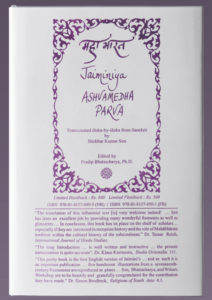
      • The Jaiminiya Ashvamedhaparva
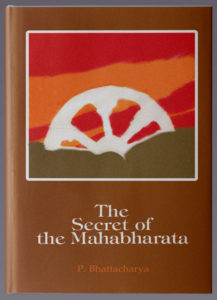
      • The Secret of the Mahabharata
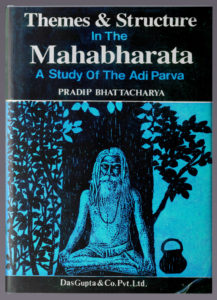
      • Themes & Structure in the Mahabharata
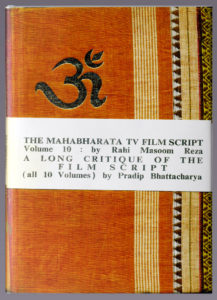
      • The Mahabharata TV film Script: A Long Critique
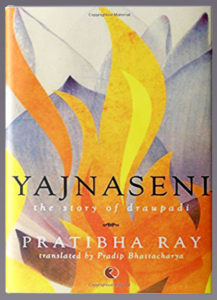
      • YAJNASENI: The Story Of Draupadi
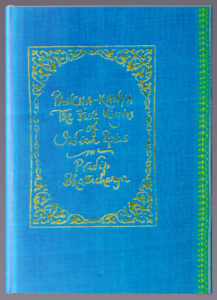
      • Pancha Kanya: the five virgins of India’s Epics
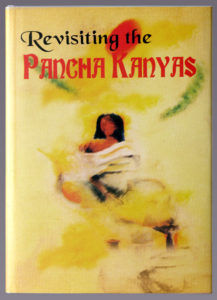
      • Revisiting the Panchakanyas
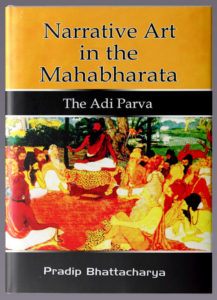
      • Narrative Art in the Mahabharata—the Adi Parva
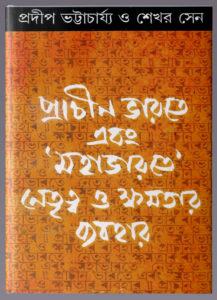
      • Prachin Bharatey ebong Mahabharatey Netritva O Kshamatar Byabahar
    • LITERATURE
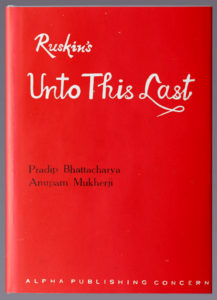
      • Ruskin’s Unto This Last: A Critical Edition
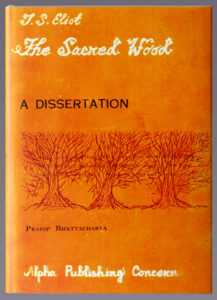
      • TS Eliot – The Sacred Wood, A Dissertation
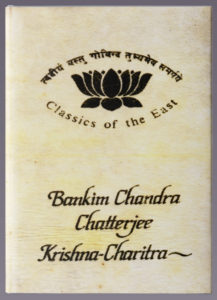
      • Bankimchandra Chatterjee’s Krishna Charitra
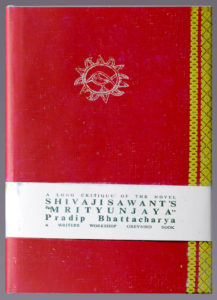
      • Shivaji Sawant’s Mrityunjaya: A Long Critique
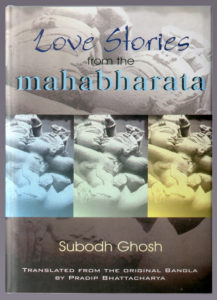
      • Subodh Ghosh’s Bharat Prem Katha
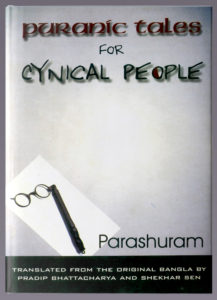
      • Parashuram’s Puranic Tales for Cynical People
    • PUBLIC ADMINISTRATION & MANAGEMENT
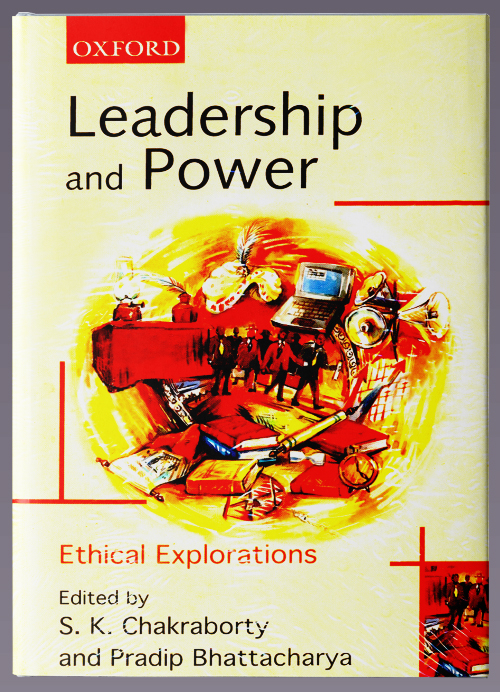
      • Leadership & Power: Ethical Explorations
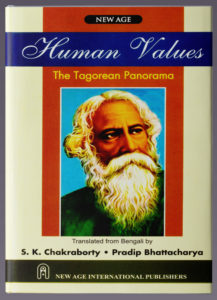
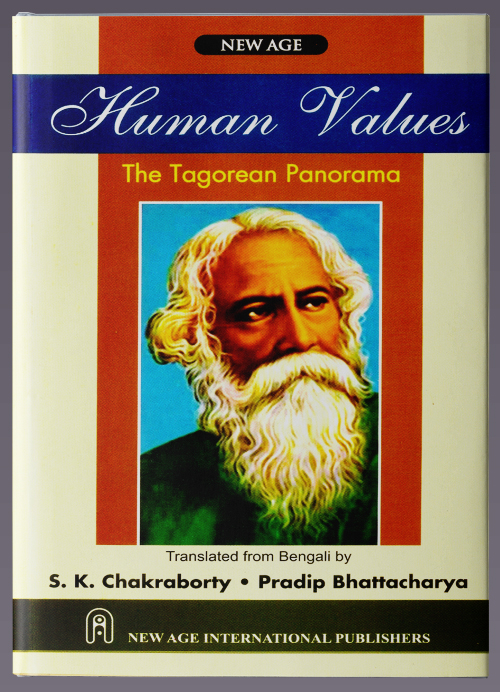
      • Human Values: The Tagorean Panorama
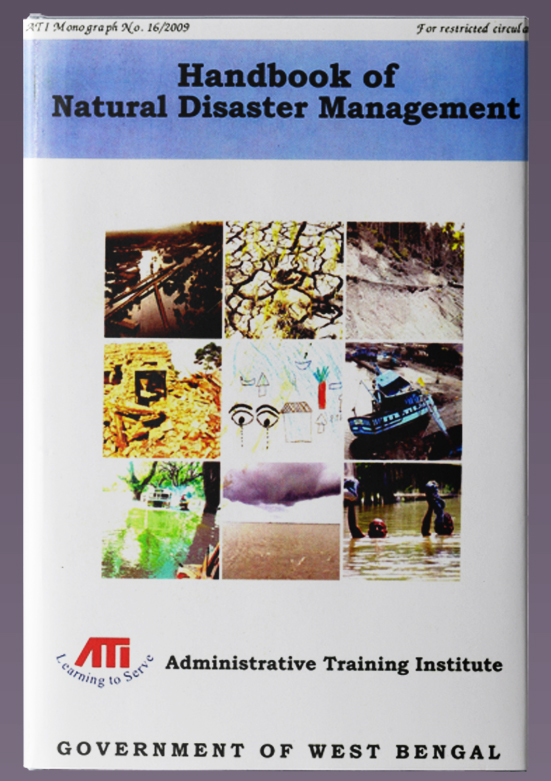
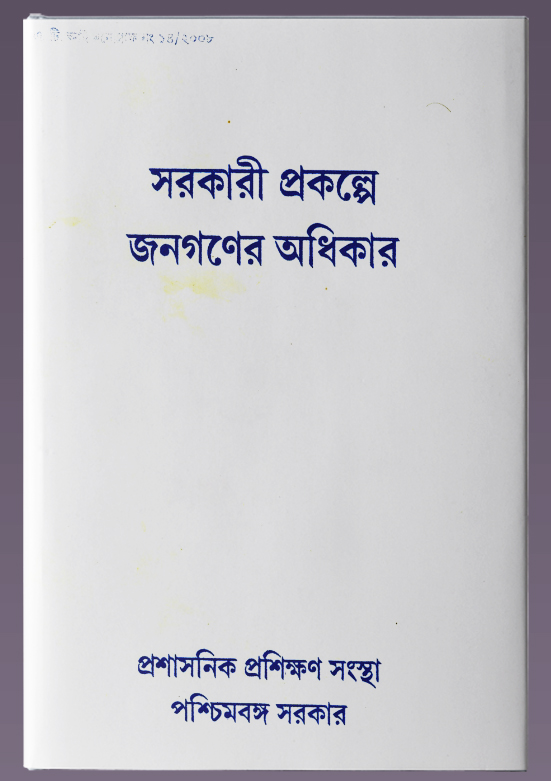
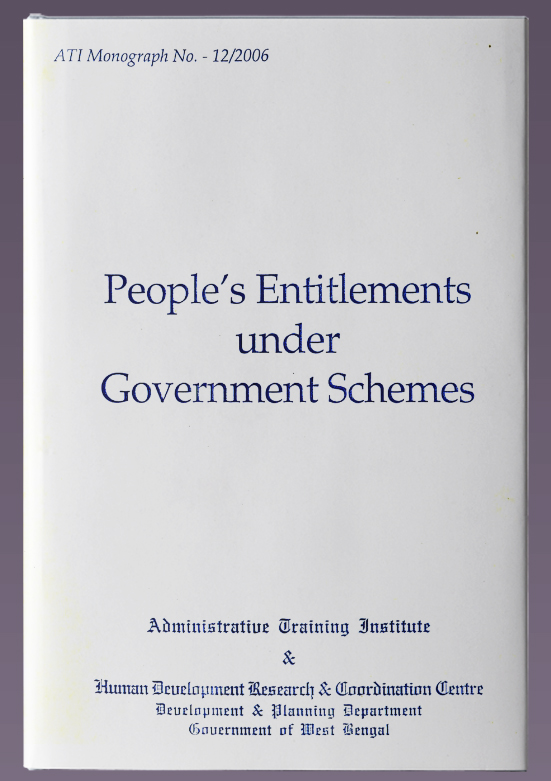
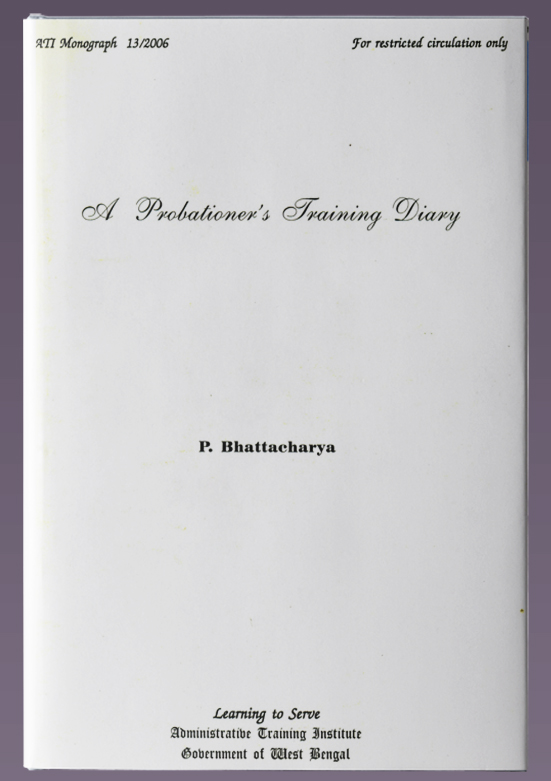
      • Edited Administrative Training Institute Monographs 1-20. Kolkata. 2005-9
      • Edited Samsad Series on Public Administration. Kolkata, 2007-8
    • COMICS
      • KARTTIKEYA
      • The Monkey Prince
    • HOMEOPATHY
      • A New Approach to Homoeopathic Treatment
  • BOOK REVIEWS
    • Reviews in The Statesman
      • Review : Rajesh M. Iyer: Evading the Shadows
      • Review : Bibek DebRoy: The Mahabharata, volume 7
      • Review :The Harivansha – The Significance of a Neglected Text
      • Review : Battle, Bards and Brahmins ed. John Brockington
      • Review : Heroic Krishna. Friendship in epic Mahabharata
      • Review : I Was Born for Valour, I Was Born to Achieve Glory
      • Review : The Complete Virata and Udyoga Parvas of the Mahabharata
      • Review : Revolutionizing Ancient History: The Case of Israel and Christianity
    • Reviews in BIBLIO
    • Reviews in INDIAN REVIEW OF BOOKS And THE BOOK REVIEW New Delhi
    • Reviews in INDIAN BOOK CHRONICLE (MONTHLY JOURNAL ABOUT BOOKS AND COMMUNICATION ARTS)
  • JOURNALS
    • MANUSHI
    • MOTHER INDIA
    • JOURNAL OF HUMAN VALUES
    • WEST BENGAL
    • BHANDAAR
    • THE ADMINSTRATOR
    • INDIAN RAILWAYS MAGAZINE
    • WORLD HEALTH FORUM, WORLD HEALTH ORGANIZATION, GENEVA
    • INDIA INTERNATIONAL CENTRE QUARTERLY
    • ACTUALITIES EN ANALYSE TRANSACTIONNELLE
    • THE HERITAGE
    • TASI DARSHAN
  • STORIES, ESSAYS & POSTS
    • Chakravyuha by Manoranjan Bhattacharya
    • The Head Clerk. A short story.
    • BANGLADESH NEW-BORN: A MEMOIR
  • GALLERY
  • PROFILE
    • About the Author
    • IN THE NEWS
      • Epic discovery: City scholars find lost Mahabharata in Chennai library – The Times of India (Kolkata)

BOOKS


MAHABHARATA:


LITERATURE:


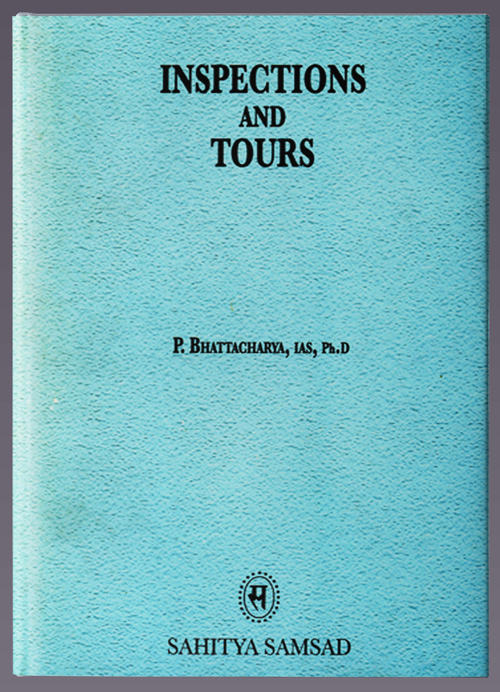
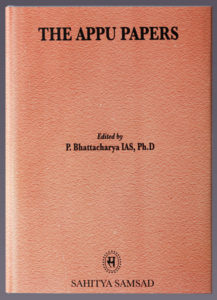
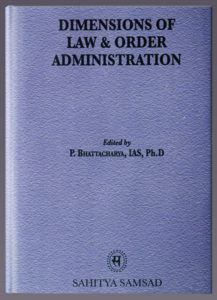
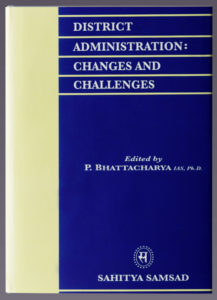
PUBLIC ADMINISTRATION & MANAGEMENT:


Edited Administrative Training Institute Monographs 1-20. Kolkata. 2005-2009:


Edited Samsad Series on Public Administration. Kolkata, 2007-8:


COMICS :


HOMOEOPATHY :


Review of the Anushasana Parva

February 23, 2024 By admin

Yudhishthira’s Questions and Bhishma’s Answers
Suganthy Krishnamachari

The Book Review, Feb. 2024

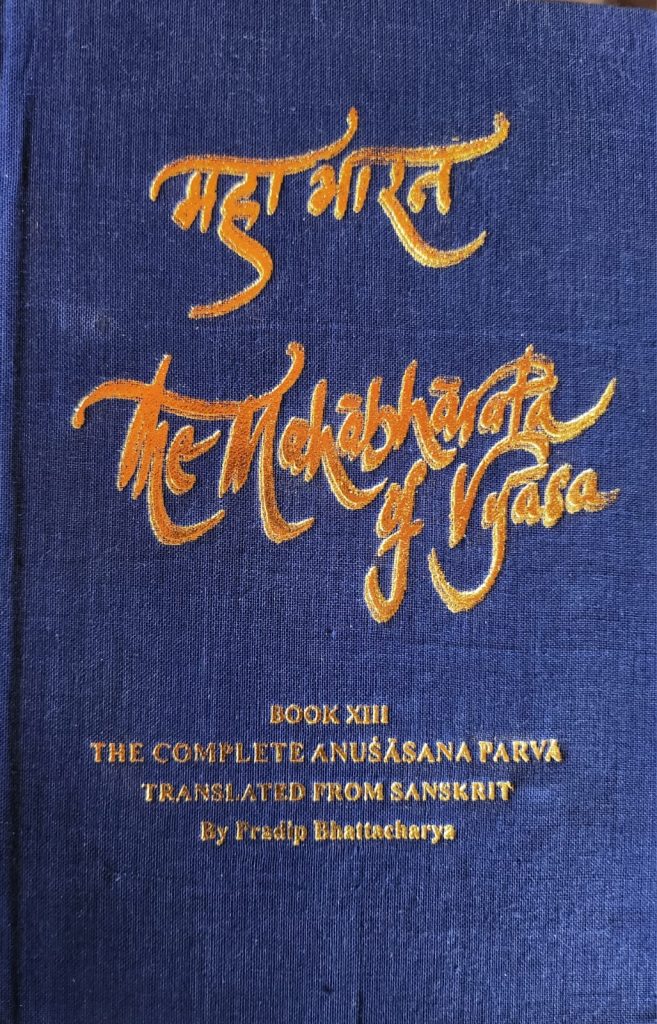
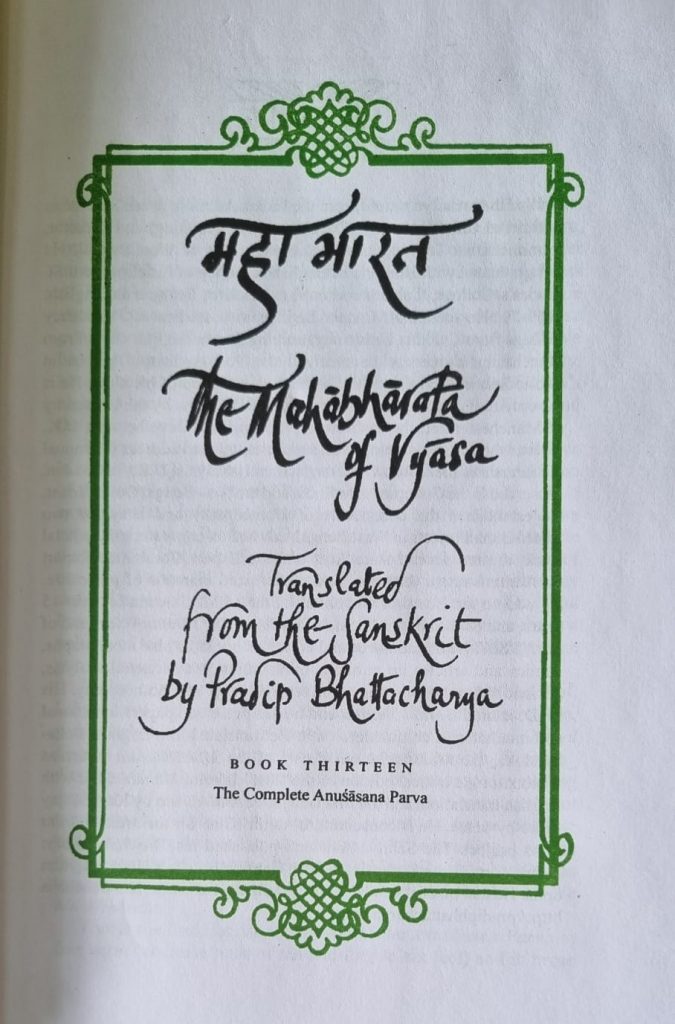
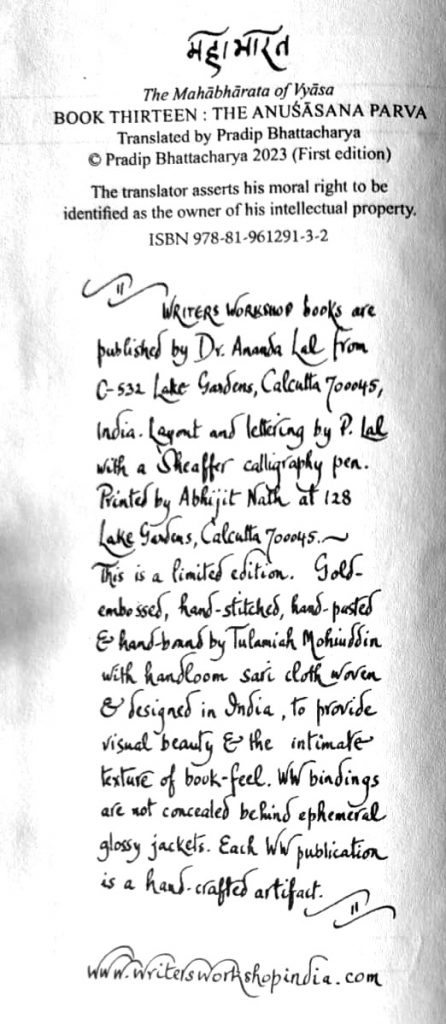
THE MAHABHARATA OF VYASA: THE ANUSĀSANA PARVA | (VOLUME 13) By Veda Vyasa.

Translated from the original Sanskrit by Pradip Bhattacharya. Writers Workshop, 2023, pp. 1256, Rs. 3000.00

The Mahabharata of Vyasa: The Anusāsana Parva, translated by Pradip Bhattacharya deals with Yudhishthira’s questions to Bhishma and the latter’s answers. It also has Uma’s questions to Shiva and his answers to her.

Bhishma is not perfect, is a flawed character himself. When Chitrangada, son of Shantanu by Satyavati died, his brother Vichitravirya ascends the throne. Bhishma does not want the family line to end. He could well have approached a royal family for a bride for the young king. But instead, he abducts three princesses as brides for his brother. It is ironic, therefore, that in the Anusāsana Parva, he tells Yudhishthira that swayamvara is an excellent form of marriage for Kshatriyas, and condemns marriage following abduction (rakshasa type of marriage) as adharma. And yet, he stopped the swayamvara of the three princesses and abducted them. In the Anusāsana Parva, he talks of the respect that we must show to wife, mother, elder sister and so on. How then does one explain his inaction when Draupadi was being disrobed? The Anusāsana Parva shows us what a bundle of contradictions Bhishma was.

These are among the many verses Bhattacharya quotes, before translating them. The reader will find this highlighting of important shlokas in Bhishma’s discourse useful. It makes the book a ready reckoner for those looking for specific topics in the Anusāsana Parva.

In Section 122, Verse 28, Bhishma says that if someone grants freedom from fear to all beings, then he is granted freedom from fear of all beings. Here Bhattacharya quotes the verse:
abhayam sarvabhutebhyo yo dadati dayapara
abhayam tasya bhutani dadatity anushushruma.
It was Bhattacharya’s reproduction of the original verse that caught this reviewer’s eye and helped make the connection to Vibhishana Saranagati. In Valmiki Ramayana, when Vibhishana arrives at Rama’s camp, Rama says:
sakrd eva prapannaya tavasmi iti ca yacate
abhayam sarva bhutebhyo dadami etad vratam mama

If a person surrenders to Rama just once, then he will ensure protection from all beings for that person, promises Rama. This Ramayana verse is often quoted in Visishtadvaita as proof of the efficacy of surrender. The idea is expanded
in the Anusāsana Parva, where all beings grant freedom from fear to a practitioner of ahimsa. The verbatim quoting of verses, even while providing translations, makes Bhattacharya’s book useful for researchers, looking for cross-references.
Bhishma has some practical advice for Yudhishthira about the need to care for tanks, which present-day rulers and administrators would do well to read, for in the modern world water bodies are being increasingly lost to urbanization.
Apart from Bhishma’s talk on dharmic practices, there is also some science in the Anusāsana Parva. In Section 110, verse 17, Bhishma warns against seeing the rising or setting sun or the midday sun directly. Never look at the sun in an eclipse or its reflection in water, he warns. Science tells us that looking at the sun directly harms the eyes. And even during an eclipse, one has to view the sun only through eclipse glasses or a telescope fitted with a special purpose solar filter. Seeing the sun’s reflection in water or snow can cause photokeratitis, when reflective UV rays result in
blindness.

Anusāsana Parva gives some interesting names of Vishnu, which one does not find in the Vishnu Sahasranamam. Here are a few: Yugantakaraa: Yuga-ender; Shiva pujya: adored by Shiva; Bhutabhavya bhavesha: past, present and future; Samkrta: piercer; Sambhava: source; Brihaduktha: loudly lauded; Jvaradipathi: lord of fever. The Anusāsana Parva also gives 1008 names of Shiva.

In Section 119 Bhishma lays down what we know as the golden rule: do unto others as you would want them to do unto you.

Bhattacharya’s translation is in verse form, and therein lies its appeal. As GK Chesterton said, ‘… The soul never speaks until it speaks in poetry…In our daily conversation, we do not speak; we only talk.’ Reading Bhattacharya’s translation is like listening to Vyasa speak to you through English verses, with Sanskrit verses interwoven into his narrative.
Bhattacharya often gives a Sanskrit name or epithet and then gives its meaning in English alongside. But the
flow of the translation is never impeded because of this bilingual presentation. This kind of presentation, in fact,
gives us an idea of the richness of Sanskrit. While agni means fire, it isn’t the only Sanskrit word for fire. And it helps when Bhattacharya writes—pavaka: bright agni; chitrabhanu: variedly radiant agni; vibhavasu: resplendent agni; hutashana: oblation eater agni. Had he just used fire instead, the translation would have been bland. In some cases, he retains original Sanskrit words like maha, for example, which finds a place in the Oxford dictionary. So, we have maha fortunate, maha energetic, maha souled, maha mighty (section 2, verse 9). No qualifying English adjective or modifying English adverb is used. And one must admit that ‘maha fortunate’ and ‘maha energetic’ read better than ‘very fortunate’ or ‘very energetic’. Sometimes the translator retains Sanskrit words and adds some suffixes as he does with puja, namaskar and pranam. In these cases he adds an ‘ed’ at the end of each word (example puja-ed, pranam-ed), and this sounds rather odd. And horribler than the horriblest (Section 148, Verse 49) can do with some rephrasing.

Bhattacharya’s is a monumental work, splendid and impressive, and would be a great addition to any library.

Suganthy Krishnamachari is a Chennai-based freelance journalist, and has written articles on history, temple architecture, literature, mathematics and music. Her English translation of RaKi Rangarajan’s Naan Krishnadevaraya, and Sujatha’s Nylon Kayiru were both published by Westland Publishers.

Filed Under: BOOK REVIEWS, IN THE NEWS, MAHABHARATA Tagged With: Mahabharata

THE EPIC AND THE NATION

October 15, 2023 By admin

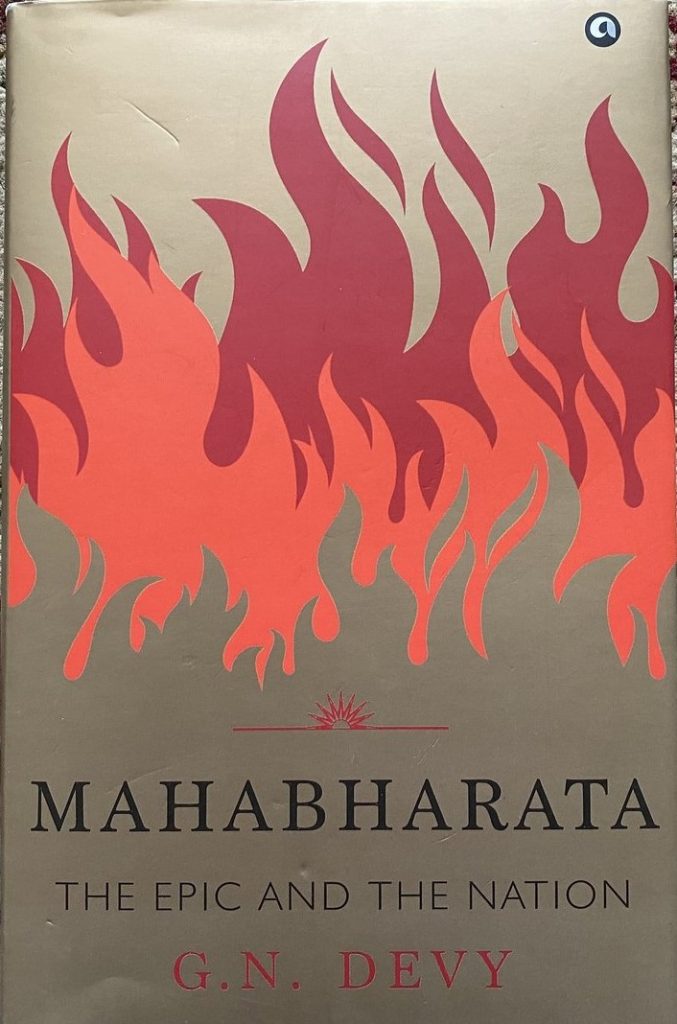
G.N. Devy: Mahabharata: The Epic And The Nation. Aleph, New Delhi, 2022, pp.142, Rs.499.

It is a testimony to the firm foundations upon which the Mahabharata (MB) rests in India that the traumatic Covid pandemic, which generated so many new phenomena, led Professor G.N. Devy to ruminate on the significance of Vyasa’s mahakavya for the country. His proposition: while the myths we live by lie in the Ramayana and the MB, the West draws upon religious texts, not epics. He asks, why has the caste-split land yet to become anation, “a substantially homogeneous people, despite its exposure to the epic for thousands of years?”

Devy covers an extensive expanse from genetics (David Reich’s Who We are and How We Got Here) to linguistics (David Anthony’s The Horse, The Wheel, and Language, Maheswar Neog’s Essays on Assamese Literatures) to literary theory. For him, Indo-Iranians entered the subcontinent with the horse-and-chariot and mingled with Out-of-Africa southerners to produce the MB culture, shifting from pastoral to agrarian, urban and feudal society. MB combined the mythic and historical pasts as a history marked by “assimilation, synthesis, combination, acceptance and moving forward without exclusions (p.72).” Its great success lies in “making alive two powerful symbols, the wheel and the horse…for future generations.” (p.93). “Its mesmerising appeal is its ability to use history to enliven myth…a veritable mine of ideals of courage, moral truth and liberation.”

Devy’s dissertation rises to several peaks. He is one of the few who realise that the MB was a watershed in socio-political thought. Wandering rhapsodes (sutas) brought to the general public, including the depressed classes and women, scriptural ideas, mystic insights and philosophical ruminations that had been the privilege of priesthood and royalty so that “It became the non-Brahmin’s book of religion (p.106).” To Devy the MB embodies our civilization’s “great negative capability” (p.109), comfortable with multiple beginnings, no definite end, many diverse strands of life and thought, no rigidity of caste structure. We meet bloody Brahmins (Parashurama, Drona, Kripa, Ashvatthama); Kshatriya Vishvamitra becomes a Brahmin, creates new celestial bodies, has Vasishtha’s son killed by turning a raja into a rakshasa, even steals a dog’s haunch from an untouchable for food. None of the protagonists are true-blooded Kshatriyas. After Parashurama’s massacres of Kshatriyas, the class was regenerated by Kshatriya women approaching Brahmins. The Lunar Dynasty itself progresses through Raja Yayati’s sons by Brahmin Devayani and Asura Sharmishtha. Vyasa, born of sage Parashara forcing himself on a fisher-girl, engenders Dhritarashtra and Pandu. The Pandavas’ fathers are unknown, as Duryodhana scoffs publicly. Therefore, Arjuna’s quandary over engaging in a war leading to miscegenation is entirely questionable and ought not to need elaborate philosophical discourse to be dispelled. Devy feels this concern was inserted later because the story brings together tribes, cultivators, herdsmen, “descendants of the society that had created Sindhu culture…a new language, better methods of warfare, and a different pastoral culture.” He refers to the Andhra “Vyasa community that has preserved its genetic identity through strict endogamy over the last 3000 years” as an example of the obsession with avoiding caste-intermixing. His claim about the Gita being “seamlessly woven into the epic-text” is questionable because at its end the Bhishma Parva continues seamlessly from where the text was interrupted by the Gita.

The MB did not avoid contemporary philosophical debates as Devy claims (p.78). Gleaning is explicitly extolled over Vedic yajna, a righteous meat-seller and a housewife over an ascetic Brahmin. Character, not birth, makes a Brahmin. Preservation of life and social order is preferred to blind adherence to truth. The eight-fold path of moderation is voiced and there are references to Jains and Charvakas too. Yudhishthira’s grand horse-sacrifice is shamed by a mongoose who glorifies a gleaner’s gift instead. To cap it all, in a supreme tour-de-force, Yudhishthira himself reviles the gods as well as Dharma itself in the final book.

A peak insight of Devy’s is that Kunti is an unparalleled heroine in the literary world. Kunti, her abandoned son Karna and her nephew Krishna occupy the heart of the story. She ushers Vedic gods into the Mbh (p.60). However, Devy overlooks how it is Kunti’s Yadava blood that rules after the Kurukshetra War, not the Kuru dynasty. Parikshit, grandson of Arjuna and his maternal Yadava cousin Subhadra, rules in the Kuru capital Hastinapura, not the elder Yudhishthira’s son Yaudheya or Bhima’s Sarvaga. Vajra, Krishna’s great-grandson, rules in Indraprastha of the Pandavas. Satyaki’s grandson Yugandhara rules near the Sarasvati and Kritavarma’s son in Martikavat, both Yadavas. So, was Krishna’s game-plan to replace Kuru by Yadava hegemony?

Devy points out that Arjuna alone, Rama-like, strings the Kindhura bow Shiva gave Drupada (vide the Southern recension). As Brihannada he parallels Shiva’s Ardhanarishvara (male-female) form as well as his dancer role. Not only does he become a eunuch, but he also hides behind trans-gender Shikhandi to kill Bhishma. Arjuna sees the trident-wielder preceding his arrows and felling the targets in Kurukshetra. Actually, Shiva’s presence is heralded early when Indra insults Shiva and Parvati playing dice and is condemned to take human birth along with four previous Indras.

Devy provides an important insight: the two towering figures on either side, Bhishma and Krishna, both 8th sons, do not fight for themselves but for the Dhartarashtras and the Pandavas respectively. Further, blessings, curses and supernatural interventions are used as devices (deus ex machina) to move the plot along. Even demons intervene to dissuade Duryodhana from committing suicide. Vyasa himself intervenes often in person to change the course of events.

Devy does sink into some troughs though. Ganesha snapping off a tusk to transcribe Vyasa’s dictation is not in the MB (p.10), nor is Gandhari making Duryodhana’s body invulnerable (p.68). What the MB does have is Shiva making Duryodhana’s torso adamantine and Parvati making his lower part lovely and delicate as flowers. Satyavati’s son by Shantanu was Chitrangad, not Chitravirya. Kunti is not chosen to wed Pandu but chooses him (p.59) and is not born because of any blessing (p.71). Jayadratha did not expose himself to Draupadi in the dice-game-hall (fn p.70); that was Duryodhana. Bhrigus are not Kshatriyas but Brahmins (p.61). Nowhere does the MB state that Varuna as Vayu became Bhima (p.60). How is Saranyu equated with Cerberus the three-headed dog guarding hell (p.35)? Saranyu is not the dark, as Devy writes in one place, but the dawn as he correctly states elsewhere. It is not that no attempts have been made to collect regional translations for comparison (p.21). In 1967 M.V. Subramanian ICS documented variations from Vyasa in the South Indian languages plus Bhasa, Bhatta Narayana, Magha and Bharavi. The IGNCAshould now cover all regional languages. The 11 pages long genealogy at the end fails to engender a sense of “a seamless combination of myth and history” as claimed.

Devy overlooks the remarkable motif of the Yadavas, descendants of the disinherited eldest son Yadu, ultimately regaining dominion. Nahusha’s eldest son Yati turns sanyasi, so the younger Yayati inherits Khandavaprastha. He disinherits four elder sons (Yadu etc.) in favour of the youngest Puru. In Hastinapura, Pratipa’s eldest son Devapi is disinherited because of a skin ailment.The younger Shantanu is enthroned. He bypasses his eldest son Bhishma for the younger stepbrothers. The elder Dhritarashtra being blind loses the throne to his step-brother Pandu. Yudhishthira, the eldest, is tricked into exile by his younger cousin Duryodhana who rules. Another key feature missed is the theme of parricide and fratricide is—a reason for the narrative’s continuing appeal through the ages.

Devy accepts Abhinavagupta’s assertion that the MB’s prevailing emotion is “shanta, empathetic detachment”. In World of Wonders (2022) Hiltebeitel argued convincingly that it is an epic of wonder, adbhuta being the rasa mentioned most frequently. Devy’s identification of Yama with Dharma is questionable. Kunti does not summon Yama for a son, as he claims (p.51), but Dharma as Pandu wants his first son to be beyond reproach. All of Yudhishthira’s interactions are with Dharma, not Yama. It is Dharma whom Animandavya curses to be born as a Shudra (Vidura). Yama as god of death first appears in section 199 of the Adi Parva as the butcher-priest in a yajna of the gods, because of which humans do not die. Only in section 9 is Dharma called the god of death who resurrects Ruru’s snake-bitten wife Pramadvara, raising the speculation that he got identified with Yama.

Devy misses the backdrop of the divine plan (as in the Trojan War) to rescue earth from proliferating demonic rulers. Gods take human birth to engineer a massively destructive war whereafter they merge into their original selves. There is no cycle of rebirth here, which distinguishes the MB from religious texts.The MB articulates the concept of four “yugas” (like the Hellenistic four ages) of which Vyasa calls Kali the best when bhakti fetches swift salvation, without the intensive ascesis and elaborate sacrificial rituals of earlier eras. Devy proposes that the MB war keeps the kala-chakra, wheel of time, in perpetual motion. It is not a war to preserve ritualistic dharma. Balarama’s strange aloofness from the fratricide at Kurukshetra and Prabhasa, despite being the avatar of Shesha and a white hair of Vishnu’s, goes unnoticed.

With the expanse and depth of Devy’s reading, not mentioning Sukthankar’s profound insights in On the Meaning of the Mahabharata is strange. Further, as Devy pinpoints Yudhishthira and Yama as the composition’s main focus, the omission of Buddhadeb Bose’s masterly portrayal of Yudhishthira as the true hero in The Book of Yudhishthira is puzzling.

Devy concludes that the MB “unites us as a nation through a similarly perceived past, not through a similarly perceived collective self…not in any imagined territorial national space…(but) in Time…the never-stopping kala chakra…a great spirit of acceptance of all that is.” Vishnu’s couch, the infinite coils of Shesha, and Krishna’s discus, both symbolise Cosmic Time and its endless revolutions.

The appeal of the MB, however, is not limited to India. Even when shells and bombs were exploding in the streets during the siege of Leningrad in 1941, Vladimir Kalyanov was translating the MB into Russian in the Academy of Sciences on the Neva River embankment by the dim light of wick lamps, with no light, no fuel and no bread in the city. Nehru admired that nothing interrupted the work even during the hardest of times.

[This was published in a slightly altered form in The Book Review issue of October 2023, pages 21 to 23

Filed Under: BOOK REVIEWS, IN THE NEWS, MAHABHARATA Tagged With: Book Reviews, Mahabharata

The Anushasana Parva: The Book of Instructions

October 7, 2023 By admin

This is Book 13 of the Mahabharata, and the most complete English translation, in verse and in prose carefully following the original, published on 5th October 2023 by Dr. Ananda Lal from www.writersworkshopindia.com

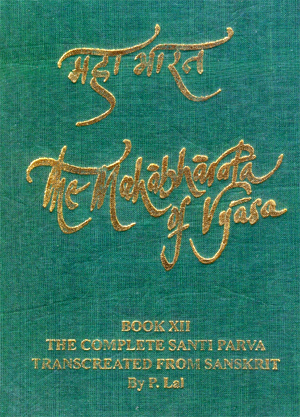
The project that Prof. P. Lal began in 1968 and was unable to complete (he could publish only 16 of the 18 books before passing away) is now complete. My translation of the complete Mokshadharma Parva came out in 2016.

My guru-dakshina to my Acharya is complete.

https://www.facebook.com/553071972/videos/837756184467669/

Filed Under: BOOKS, IN THE NEWS, MAHABHARATA Tagged With: Anushasana, Mahabharata

An Epic of Wonder, not of War and Peace

March 30, 2023 By admin

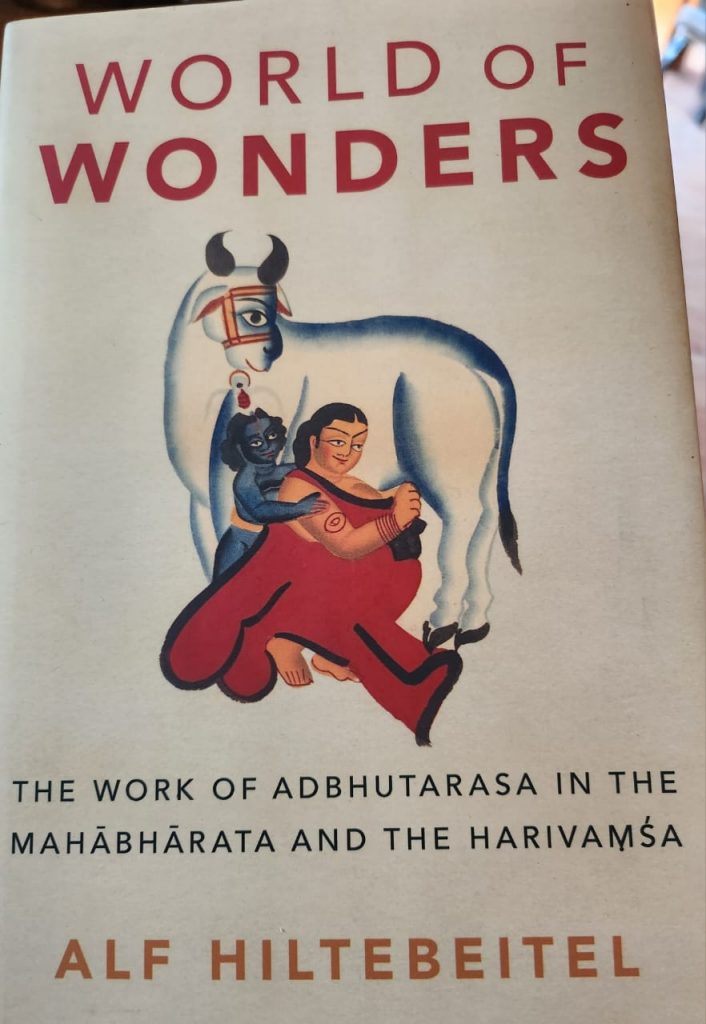
Alf Hiltebeitel: World of Wonders: The work of Adhbutarasa in the Mahabharata and the Harivamsa. Oxford University Press, 2022, pp. 343.

When Akbar commissioned a Persian rendering of the Mahabharata (MB), he named it Razmnama, the Book of War. Centuries earlier, however, the Kashmiri aestheticians had argued that the dominant flavour (“rasa”) of MB is shanti, peace, with its stable emotion (“sthayi bhava”) of “vairagya”, detachment. Alf Hiltebeitel, the most prolific scholar on MB, who passed away in January 2023, presents a challenging thesis in his most recent foray, namely that neither the heroic (“vira”), as generally presumed, nor peace (shanti), but rather wonder (“adhbhutam, ashcarya”) is the primary flavour along with its stable emotion of surprise (“vismaya”). He is building on a realisation recorded in the last chapter of his earlier book, Freud’s Mahabharata, about the replenishing of Draupadi’s garment (referring to it anachronistically as “sari” repeatedly) being termed the greatest wonder in the world, “adhbhutatamam loke”. His search of the electronic text for the cluster “adbhutam-ashcharya-vismaya,” in MB and the Harivamsha (HV) confirmed the preponderance of the wondrous and showed that HV is part of the epic, not a mere appendix. He finds roughly 592 occurrences of “adbhutam-ashcharya” and 339 of “vismaya-vismita” distributed fairly evenly across both HV and MB. It is this dominant “rasa” that makes for the unity of the epic.

Hiltebeitel points out that the last three books of MB, with a total of eighteen chapters (like the Gita’s and the 18 books ot the epic), expose us to a series of rude shocks, presenting “unexpected outcomes”. The deaths of Krishna and Balarama, the submergence of Dvaraka, the looting of Arjuna’s caravan that destroys his heroism, Yudhishthira’s condemnation of dharma and the gods after his vision of hell and Janamejaya’s last question are analysed in detail. After Vaishampayana has explained that every hero (the women are not mentioned) merged into his original identity, Janamejaya was highly astonished (“vismito ‘bhavad atyartham”). The dominant flavour “wonder” and its stable emotion “surprise” are repeatedly evoked. The epic ends with the “Bharata Savitri” of the concluding statement by Vyasa “of wondrous deeds” to his son Shuka.

Varying perceptions about MB existed contemporaneously with the Kashmiri aestheticians of the 9th and 10 centuries CE. The first regional retelling of MB saw it as a heroic narrative, which is why Peruntevanar made Krishna his hero in the Tamil Paratavenpa (9th century CE) and Pampa had Arjuna crowned king at the end after Yudhishthira’s abdication in the Kannada Vikramarjunavijaya (10th century CE). Hiltebeitel finds that the “adbhutam” clusters are fairly evenly distributed in both MB and HV, missing only from Book 17 (the Great Departure). He concludes that the element of surprise is as evident as the didactic and other elements like Krishna and the divine plan, Vyasa’s role, the snake sacrifice, the ending of Janamejaya’s tale, Sauti and Shaunaka.

The two lists of contents identify sections as “wondrous”, not referring to any other “rasa”. Vyasa’s miraculous summoning of the dead in Book 15 is described as exceptionally and uniquely wondrous, while Books 5, 8 and 4 are called particularly “adbhutam”. Before Hiltebeitel, no had one noted these. Analysing the occurrences in each book he finds that Book 3 (Forest Exile), is the most wonder-laden book. Among the four war books, the largest wonder-cluster occurs in the Book of Drona while the Book of Karna is the only one of them to be described in the list of contents as “full of meanings and wonders” and to devote an adbhutam-cluster to Karna. In the Bhishma Parvan they are applied to Arjuna; in the Mokshadharmaparvan they occur in the Shuka story and the Narayaniya, and in the Anushasana Parvan in the Uma-Maheshvara dialogue.

In most of the wonder passages the focus is mostly on the three Krishnas: Krishna (Books 5-9), Vyasa (Book 1, alternating with Krishna in Books 10-13 and dominating in 14-15, 17-18), Krishna (Book 16) and Draupadi (end of Book 1 to Book 4). The others focussed upon are Arjuna, Karna, Bhima and Shiva. It is the three dark Krishnas who represent, writes James Fitzgerald, “wondrous realities of the world.”

Most episodes in Book 14 (the horse-sacrifice) have the wondrous quality. Vyasa’s pupil Jaimini’s version of the book is chock-full of magic and marvels, which is possibly why Akbar chose this to be translated into Persian for his Razmnama instead of Vyasa’s original composition and why regional Mahabharatas often do the same. This book culminates in the utterly surprising debunking of the horse-sacrifice by the episode of the mongoose. This Ashvamedha Parva is surpassed by the “very great wonder” of Book 15, as the list of contents describes the Forest Ashram. Here Vyasa not only conjures up all the dead heroes, but also gets all the widows to commit suicide in the river to meet their husbands, ridding the new monarchy of the sound of endless lamentation Much earlier he had made his mother and two sisters-in-law leave the world too. Nowhere in any epic world does the epic’s composer kill off so many of his characters himself.

Hiltebeitel commits a major mistake in glossing Satyabhama as Kamsa’s sister (p. 259). On p. 289 the printer’s gremlin is very much in evidence (“Virad”, “Vior”, “vita”, “Vi”, “amring the en”, “Vieap’s” etc.), p. 292 (“amatamanthana”) and footnotes 161 (“collerium”) and 162 (“Markakrsnadeya”). Footnote 191 refers to “Haberman” who is missing from the references.

At the very beginning of HV Shaunaka praises the MB for its extremely wondrous deeds and amazing discourses. HV is replete with amazing revelations of Krishna’s divinity to Akrura et.al. that tie-up with Narada’s visions in MB’s Narayaniya. Hiltebeitel notes that the 36 clusters of surprise and wonder in HV “speak the same language as the MB”, not that of bhakti rasa. Both works stress “devotion to the vigorous heroic deity in the same world of wonders and not on his being at the centre of the devotions of his parents, sons, friends, lovers, or admiring sages.” It is by looking at MB and HV as works of literature and not primarily as theological and ethical texts that their wonders and surprises work, hinting at “a below-the-surface sense of sacrificial beauty.”

Hiltebeitel explores this aspect through the conflagration set off by Krishna’s Vaishnava energy during his ascesis and by that of Shiva when Uma covers his eyes, that consume life on the Himalayas. The same Vaishnava tejas decapitates Shishupala, whose energy merges into Krishna. The production of amrita by churning the ocean that destroys all life on Mount Mandara, mingling their “rasas” and by the Nara-Narayana duo killing asuras is analogous to this. In HV the acme is Krishna uplifting Mount Govardhana and simultaneously becoming the mountain as Indra drenches it, just as he did Mount Mandara. The Govardhana incident would have been a far more appropriate cover than the Kalighat painting depicting Krishna with Yashoda milking a cow. Hiltebeitel shows how HV is original in “thematizing an aesthetic of sacrifice” in which the Earth becomes “sacrificially beautiful…it is through her that all forms of life and death flow meaningfully together.” The Harivamsha Parva closes emphasizing that Krishna is the sole wonder and that all wonders emerge from Vishnu, the most blessed. HV is as much an adbhutarasa text as MB and is part and parcel of the epic.

Filed Under: BOOK REVIEWS, IN THE NEWS, MAHABHARATA Tagged With: Hiltebeitel, Mahabharata

Freud, Bose and the Mahabharata

March 4, 2023 By admin

Alf Hiltebeitel: Freud’s Mahabharata. Oxford University Press, New Delhi, pp. xxiii+298, Rs. 650.

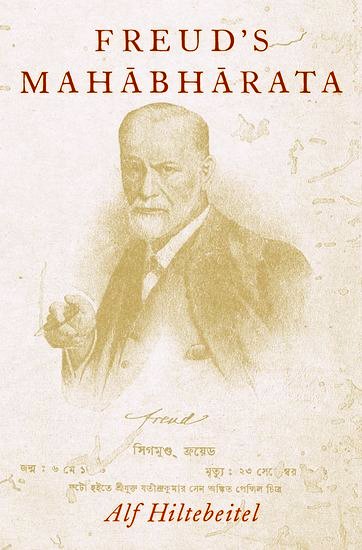
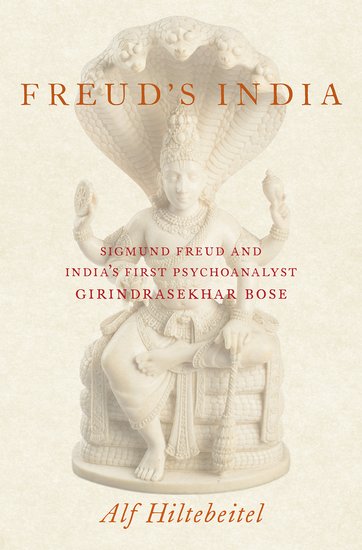
The cover of Hiltebeitel’s “Freud’s Mahabharata” has an interesting personal involvement on my part. Alf had emailed me in desperation having failed to trace this sketch drawn from a portrait of Freud (sent by Freud to Bose in 1926) by a Bengali artist Jatindra Kumar Sen commissioned by Dr. Girindrashekhar Bose which he used as the cover of the first edition of his Bengali work, “Swapna” (1928). With some difficulty Smt. Sunita Arora of the National Library (who had been put on the job by my young colleague Shri Raghavendra Singh IAS, its Director) traced it to a very fragile copy, repaired their high-resolution camera for taking a good photograph and sent that to me which I emailed Alf. That is how a Bengali artist’s sketch ended up on a work published abroad and in India. Bose removed the sketch from subsequent editions of “Swapna” possibly because he fell out with Freud around 1931. Dr Bose had sent Freud an icon of Vishnu seated on Ananta which Freud kept on his desk. This features as the cover of Hiltebeitel’s “Freud’s India”.

Hiltebeitel’s new work follows up on his “Freud’s India” where he explored personal experiences following his father’s death and his divorce that recalled Freud’s life. The cover of the book has an interesting story. Hiltebeitel had emailed me for help having failed to trace this sketch drawn from a portrait of Freud by a Bengali artist, Jatindra Kumar Sen commissioned by Dr. Girindrashekhar Bose, founder of the Indian Psychoanalytic Society, from a portrait Freud had sent him in 1926. Bose used it as the cover of the first edition of his Bengali work, “Swapna” (1928). With some difficulty Smt. Sunita Arora of the National Library (who had been put on the job by its Director, my young colleague Shri Raghavendra Singh IAS) traced it to a very fragile copy, repaired their high-resolution camera and sent me a photograph which I emailed Hiltebeitel. Bose had sent Freud an icon of Vishnu seated on the serpent Ananta, which Freud kept on his desk. This features as the cover of Hiltebeitel’s book, “Freud’s India”. Bose removed the sketch of Freud from subsequent editions of “Swapna” possibly because he fell out with Freud around 1931. Freud had referred to Bose in 1922 as an extraordinary professor who had founded a local psychoanalytic group in Calcutta.

The book immediately stimulates interest by its intriguing title since Freud never mentions the Mahabharata (MB). Dipping into it we find that it is in three parts of which the middle portion consists of chapters 2 through 5. Chapters one and six are the first and third parts. Beginning with Freud’s essay, “Das Unheimliche” (The Uncanny, as translated by James Strachey), Hiltebeitel links the MB by arguing that its dominant flavor (“rasa”) is the uncanny, as Sheldon Pollock translates “adbhuta”, and not the heroic (“vira”). He interprets the story of the five Indras immured in a cave as a pre-Oedipal intra-uterine fantasy of being buried alive, which Freud called “the most uncanny thing of all”. Hiltebeitel misses out Edgar Allan Poe’s terrifying take on this in “Tomb of Ligeia”.

In an elaborate examination of the myth of Aravan/Iravat/Kuttantavar, Hiltebeitel links his overhearing in the womb about Krishna’s wish to kill him and then emerging feet first to kick Krishna into the ocean with Freud’s theory about the return to the womb in sleep. Hiltebeitel sees in this ocean a reflection of “the oceanic feeling” that Romain Rolland wrote to Freud about, troubling him no end. There are analogous stories about Ahiravana in the Bengali Ramayana of Krittibas and Vivek in the Bengali Mahabharata of Kavi Sanjay which would have added grist to Hiltebeitel’s mill.

Influenced by Freud’s “Moses and Monotheism”, Hiltebeitel theorizes that the MB’s core myth of the divine plan to unburden the Earth reflects the trauma experienced by rural Vedic Brahmin communities of foreign invasions and the impact of “India’s second urbanization” after 500 BCE in the Gangetic plain, the first having been the Harappan civilization. This is the “urban unconscious” of Brahmanism, like Freud’s Judaism. Interestingly, the demons-on-earth (Jarasandha, Kamsa etc.) occupy the chief cities (Rajagriha, Mathura etc.). Hence, the extolling of forest-living gleaners.

It is surprising to find Hiltebeitel supporting the long discredited theory, revived by F. Wulff Alonso, of Indian epics drawing upon the Greek mythic corpus for their matter of the divine plan to relieve Earth’s burden. He does admit, however, that the MB’s myth is apocalyptic unlike the Homeric. This myth that is practically the frame story is repeated five times. First by Vaishampayana in his genealogical account, next twice by Vyasa narrating the five Indras myth and while consoling Dhritarashtra after the war, the fourth time by Narada during the rajasuya yajna and finally at the end by Vaishampayana.

Hiltebeitel finds a parallel to Freud’s “phylogenetic myth-making” with the MB’s combining myths of genealogy, cosmology, sacrifice and war in the ontogenesis of its divine plan. Freud’s assertion that the primal patriarch drove his sons out when they came of age, virtually castrating them, whereafter they could remain in the horde as harmless labourers (a stage corresponding to dementia praecox), is paralleled in the MB’s myth of Yayati disinheriting and banishing all but one of his sons. Hiltebeitel even suggests that at 23 volumes Freud’s work is larger than the MB, both texts looking to forge a new consciousness of a civilization, both heterogenous in relating myth to narrative, stylistically varied , dialogical, propounding a heroic persona with a prominent role for women.

Hiltebeitel juxtaposes the MB’s three tales about dead mothers (Madri, the Nishada woman, the corpse supposedly of their 180 year old mother strung up on a tree by the Pandavas) with Freud’s three texts dealing with the dead mother complex. Kunti is seen in the role of a dead mother to Yudhishthira, staying aloof from him and finally abandoning her sons, just as Gandhari never looks upon her children and finds Duryodhana rejecting her in open court. Hiltebeitel posits that it is Satyavati or even her fishy mother Adrika (Acchoda in the Harivamsha) to whom the Pandavas refer, as the corpse of their 180 year old “mother”, its stink being linked to her fishy birth. The dead mothers stack up over five generations (5 x 36 years per generation = 180) beginning with Satyavati (from the Yamuna) and Ganga, ending with Draupadi’s ultimate sonlessness. Satyavati is known by her fishy odour inherited by Vyasa. She is dark like the river Yamuna across which she plies a ferry, as contrasted with the pellucid celestial river, the Ganga. That she is originally called “Kali” is very significant. In iconography, Vishnu’s two wives are the Earth goddess and Shri-Lakshmi, both of whom are at the core of the MB’s divine plan.

Hiltebeitel devotes considerable space to examining how Freud’s interests are paralleled by the knowledge about Indian goddesses of Dr. Girindrashekhar Bose (who sent Freud an icon of Vishnu and had his portrait sketched which forms the cover of this book). Differing from Freud, Bose said that in India the wish for castration occurs early in childhood when, identifying with the mother, he wishes to be female. Dread of castration comes later in the Oedipal identification with the father. Hiltebeitel posits that Kali fits the profile of Bose’s “Oedipus mother”. Issues of castration come up in the cult of Aravan/Kuttantavar who sacrifices himself to Kali before the MB war.

Bose theorized that the wish to be hit always accompanies a wish to hit. In “Freud’s India” Hiltebeitel had wondered whether this wish to be struck characterizes snakes. Aravan’s mother is the female serpent Ulupi. Snakes who “infest the MB”, argues Hiltebeitel, largely represent not tribals but the unconscious, “basic raw wishes, hostilities, or desires” of the unconscious. Analysing three versions of the Aravan/Iravat/Kuttantavar tale, Hiltebeitel finally admits that his self-sacrifice before the war (“kalappali”) cannot be said to involve a wish to be struck. However, this Tamil cult, much celebrated by Hijras, has evidence of a link between the castration wish and a desire to be female that Bose posited as occurring in the pre-Oedipal stage. In this phase the “Oedipus mother” has a powerful role, as seen in Aravan’s multiple mother figures (Ulupi, Draupadi, Kali). Hiltebeitel concludes that Bose’s theory explains these Indian cults which Freud’s does not.

Examining Freud’s work on Moses and on Jokes, Hiltebeitel links the discussion to the tales of gleaners in MB, claiming that the epic was the composition of “a committee of ‘out of sorts Brahmins’” (hence the extolling of gleaners) in the 2nd century BCE in Kurukshetra. Vyasa’s stink and disagreeable appearance makes him “the consummate out-of-sorts Brahmin.” This period of second urbanization (600-300 BCE) saw the rise of towns vis-à-vis forest life. Gleaners in the Naimisheya grove near Kurukshetra complete a twelve-year yajna during which, because of the numerous rishis, the tirthas got urbanized (“tirthani nagarayante”). Hiltebeitel imagines them traumatized by foreign invasions (hence the prominence of the north-west in MB) and the challenge of heterodox movements backed by royal patronage (Chandragupta and Jainism, Bimbisara and Ajivikas, Ashoka and Buddhism). He argues that they “projected features of current second-or first-century urban architecture back into” the Vedic world whose memories lay in their subconscious. They developed the Rig Veda’s ten mandalas (16th to 11th century BCE) into the ritualistic three other Vedas (11th to 9th century BCE) and then their branches (8th to 3rd century BCE) climaxing in the encyclopaedic MB in the fourth stage in the 2nd century BCE. The references in MB to Greeks, Chinese and Shakas, but not the Pahlavas or Kushanas, indicates a completion of composition before the end of the pre-Common Era, by the late Shunga or Kanva times. Support is found in the MB’s reference to the land being dotted with “edukas” (Buddhist mounds of relics). In the Book of the Forest, one Shaunaka discourses to the Pandavas on the Buddhist eight-fold path; a butcher speaks the Jain version of ahimsa and in the Shanti Parva Bali lays out the Jain doctrine of six “leshyas” (colours) of matter.

Seeking to find correspondences in MB with Freud’s theory about jokes, Hiltebeitel makes a laboured argument that Vyasa’s levirate episode with Ambika and Ambalika contains an innuendo: the two “mahishis” (chief queens/female buffaloes) unite with the smelly, unkempt Vyasa in the role of the horse of the ashvamedha rite. In the “Narayaniya” narrative Vyasa reveals that he is born of Harimedhas, the essence of the Horse-headed avatar. The year-long vow Vyasa wanted them to observe parallels the horse-sacrifice’s prescription of abstinence for a year. By rejecting this, Satyavati renders the queens impure for the rite. Hiltebeitel hazards a bad joke of his own: “Vyasa’s shaggy-dog story has turned out to be a shaggy-horse or a talking-horse story.”

A very rewarding read is Hiltebeitel’s analysis of the narrative structure of the “Narayaniya” identifying how the dialogue level shifts thrice from the inner frame (Janamejaya querying Vaishampayana, within which Vyasa speaks to the former too across six generations) to the outermost (Vyasa discoursing to his five pupils) through the outer frame (Rishi Shaunaka querying Ugrashravas Sauti) via the intermediate dialogues (Yudhishthira querying Bhishma). Ultimately, Hiltebeitel sees the MB as “the recovered memory” of a Vedic past replete with “partially unconscious and forgotten meanings about that past”. —Pradip Bhattacharya

Filed Under: BOOK REVIEWS, IN THE NEWS, MAHABHARATA Tagged With: Book Reviews, Mahabharata

Breaking the All-India Railway Strike 1974

February 9, 2023 By admin

1. It was 1974. Mihir Kumar Das, an officer of the West Bengal Civil Service (Executive) cadre, was posted in Chandernagore sub-divisional headquarters of Hooghly District in West Bengal, as one of three Deputy Magistrates on duty. He had spent about one and a half years in the Subdivision. He used to perform Treasury work in the first half and Court work as Executive Magistrate in the second half of the day. He was also assigned magisterial duty in law and order problems either at Telenipara or at Champdani as and when required. These were communally the most sensitive places of the Subdivision.

2. Chandernagore was then otherwise a very beautiful place to live in. It had been a French colony and was culturally rich with a heritage background. It was additionally attractive for its excellent riverside strand. The Subdivision consisted of three rural blocks viz., Singur, Haripal and Tarakeswar and two municipalities viz., Champdani, Bhadreswar and the Chandernagore Corporation.

3. In May 1974, the All India Railway Men’s Union called for an indefinite strike of the Indian Railways all over the country under the leadership of George Fernandes, later a Central Minister. The strike started from 7th May.  Pradip Bhattacharya, an Indian Administrative Service officer of the 1971 batch, was the Subdivisional Officer (SDO) since mid-1973, aged 26. He deputed Das for law and order duty at Kamarkundu Railway Station (RS) on the Tarakeswar-Sheoraphuli line. Kamarkundu was a very important business hub.

4. It was Bhattacharya’s first subdivision. He strongly believed in teamwork, successfully rehabilitating about thirty thousand evacuees from Malda to Rajshahi in Bangla Desh in 1972. On account of the prevailing severe crisis in cement, Petroleum Oil and lubricants (POL), baby food, rations and electricity, and the strike in numerous jute mills, work had to continue well after office hours. The SDO made it a point to arrange for refreshments in the late evenings for sharing with his officers so that their energy level did not flag and the massive workload could be handled. When his officers had to camp out­side headquarters for law and order duty, as during Muharram etc., he would drive out to them with magazines and food to maintain their morale.

5. Das reached Kamarkundu RS by the office jeep early in the morning of 7 May 1974. An Inspector of Police had also reached by then along with a group of other police personnel and was holding a temporary camp office in a tent. There was a Rest Room meant for railway officials at Kamarkundu RS and Das put up there.

6. None of the railway employees attended to their duties but many of them were standing outside the station watching the situation. Das asked them to come in and join their duties but it was of no use. There were constant announcements over the microphone outside, urging the employees to make the strike a success. But Das had something else in his mind. From the very beginning, his mission was to run the train services at least be­tween Sheoraphuli and Tarakeswar, which is a major pilgrimage centre with a Shiva temple. Moreover, Tarakeswar is the terminal station of this railway line and the farthest point of the Subdivision. The region was very rich in agriculture and the produce was sold in different parts of the state. Indefinite strike would result in heavy economic loss.

 The first day was uneventful.

7. From 8.5.1974, the second day of strike, Das began do­ing ground work. He tried to convince the employees to join their duties and assured them of their security. At the same time he contacted the concerned officers of the Divisional Superintend­ent’s Office, Howrah Railway Division (DS Office) asking for their help and services in resuming a shuttle train service between Sheoraphuli and Tarakeswar during the strike.

8. The groundwork started yielding results from 9th May. The Station Master and one or two sweepers joined duty on that day. More were in the queue. Overhead electrical wires had been either removed or damaged. Das re­quested the DS Office, Howrah, to repair and restore the overhead electric wires and to repair the rakes lying at Tarakeswar RS by sending technical staff through a dummy train. The police officer camping at Kamarkundu RS was requested to arrange patrolling in the residential area of the railway employees, the road between the residential complex and the Railway Station and the Bazaar area where the staff willing to join duty were expected to go.

9. On 10th May, in response to Das’s suggestions, DS Howrah sent a train with extra staff to Tarakeswar. They took one of the three rakes lying at Tarakeswar RS for using them in shuttle service. It was noticed that miscreants had cut the motor cables. Therefore, the rakes had to be sent to the workshop for repair. Overhead electric wires were replaced and/or repaired and electric connection restored. Some passengers were put into the dummy train that ran on that day as a signal to both the striking employees and the regular commuters. It helped a lot to boost confidence among the public.

10. In response to Das’s request on 10 May, telephone con­nections between Howrah Control and Tarakeswar and Kamarkundu RS were restored. Electricity in Tarakeswar RS was also restored.

11. There was no arrangement of tea, breakfast, lunch or dinner where Das was put up. The SDO used to send his lunch from Chandernagore everyday. When he came to meet Das to review the latest situation on 10th May, he him­self carried his lunch to Kamarkundu. Das had left behind his aged mother, wife and a three year old son at Chandernagore while proceeding to Kamarkundu.  There was no male member to look after them in his absence. The SDO regu­larly looked after Das’ family in his absence. Unlike now, the telecommunication system was then very poor. Das could not keep direct contact with his family. The SDO regularly kept him informed about his family members.

12. On reaching Tarakeswar RS on 11th May, at 8.15 a.m. Das found the Station Master and the Commercial Transportation Inspector (CTI) deputed from Bandel to provide phone connection with Howrah Control and electricity at Tarakeswar RS. By then, a group of technical personnel viz. Permanent Way Inspector (PWI), Signal Inspector (SI), Traction Driving Inspector (TDI) etc. had reached Tarakeswar RS with a patrol-special. Two rakes were found sta­bled on the first railway track on Tarakeswar. Das requested the PWI, Signal Inspector and the TDI to spike the other subsidiary lines and keep open only one line i.e. the 3rd line so that a shuttle service between Tarakeswar and Sheoraphuli could be run. They informed him that the rake was in operative condition and could run as shuttle up to Howrah.

13. Through interaction with them, Das learnt that the TDI was initially a Motorman. At his earnest request, the TDI hesitatingly agreed to drive the train but requested him to take the approval of the Divisional Operating Superintendent (DOST), Howrah. The DOST Howrah immediately approved of the scheme and desired to talk to the TDI who in turn told him that the rake was not in a condition to move to Howrah and that the Magistrate (Das) was unnecessarily forcing him to drive the defective rakes. He further stated that being a Senior TDI he could not drive a rake without getting clearance from the TXR (Train Examiner). When the discussions between the DOST and TDI were over, Das again talked to DOST and informed him that the TDI had earlier certified that the rake was all right for moving to Howrah and that he was willing to drive it.

14.  After the conversation, Das asked the TDI why he made such a contrary statement to the DOST. In reply he stated that he could not run a rake based on the orders of a Magistrate and what he required was a permission from the Chief Op­erating Superintendent (COST), the superior of DOST. He also denied that he had agreed to drive the rake if he got the permission from the DOST. As no force been applied on him, he was asked to explain why he used the words ‘unnecessary force’ while talking to the DOST. He then begged apology. Das made it clear to him that what­ever he was doing was in the exclusive interest of the public at large and that if a shuttle service could be run between Tarakeswar and Sheoraphuli great public confidence could be earned. He found the TDI most unwilling. Das could not understand if his request to run the rake had hurt the ego of the TDI. Perhaps, he felt that he was no more a Motorman to run a train as he was holding a higher post.

15. So, Das started thinking about some other alternative. He asked the PWI and the driver on the Steam Engine carrying the Patrol-Special if the Steam Engine could carry the rake making it a ‘Special’ to run up to Sheoraphuli. Both of them thought it to be a good idea and assured him of taking necessary action in the matter. PWI, SI and the Driver concerned arranged every­thing and the rake was ready for movement. Das decided to start the train immediately. It was about 10.30 a.m.

16. Meanwhile, most of the railway employees posted at Tarakeswar RS assembled and expressed their willingness to join their duties. It was learnt that all of them had reported sick and remained absent since 3rd May. Das first talked to everyone to ascertain their willingness to work. He also made it clear to them that there was no pressure on them from the Civil Administration to join under duress. All of them expressed their firm willingness to join. They joined their duties willingly.

17. In the course of this Das had announced that a ‘special’ train would leave for Sheoraphuli shortly and requested passengers to board. There was a good response from the public. The rake, which had been declared unfit by the TDI over phone to the DOST, left Tarakeswar Station at 11.10 a.m. as the first Special drawn by the steam engine of the Patrol-Special carrying a good number of passengers. Before the train left, Das sent a message through the Emergency Control of the railways to D.S., Howrah with a copy to SDO, Chandernagore, District Magistrate, Hooghly etc. which is reproduced below:

FROM: DAS, DY. MAGISTRATE, CHANDERNAGORE, CAMP TARAKESWAR.

TO: DIVISIONAL SUPERINTENDENT, HOWRAH.

                TO MEET PUBLIC DEMAND ONE RAKE WITH PASSENGERS BE­ING MOVED UP TO SHEORAPHULI WITH THE HELP OF STEAM EN­GINE OF PATROL SPECIAL WITH LIMITED STOP AT HARIPAL, NALIKUL, KAMARKUNDU, SINGUR AND DIARA (.) THE SAID RAKE MAY RUN AS SHUTTLE BETWEEN TARAKESWAR AND SHEORAPHULI AT LEAST 4  TIMES A DAY ON UP AND DOWN LINE EACH (.) THIS IS REQUIRED FOR EARNING PUBLIC CONFIDENCE (.) TWO ASMS THREE TCS TWO BOOKING CLERKS ALL SWEEPERS, PORTERS, SHUNTERMAN, BOX-PORTER, ONE GATEMAN AND ONE CABIN-MAN REMAINING ON SICK LEAVE AND AVAILABLE HERE ARE ALLOWED TO JOIN THEIR DUTIES PEND­ING FURNISHING FIT CERTIFICATE FROM AMO, KAMARKUNDU WHEN AVAIIABLE (.) EXPECTED MORE PERSONS TO JOIN (.) THEY WILL ALSO BE ALLOWED TO JOIN (.) D.S. WILL KINDLY APPROVE OF THE AR­RANGEMENT (.) MESSAGE ENDS (.)”

18.  Enormous popular support was received when the first ‘Special’ was started. Das got the station cleaned up by the sweepers after they joined. At 11.45 a.m. the Engineer-in-Chicf (EIC) ar­rived with his team at Tarakeswar RS in response to the radio­gram message to D.S. Howrah sent on 10.5.74. Another rake was then run on 3rd line, which was also spiked by the PWI’s men for making the said line operative for running one shuttle only. The EIC, Mr. Banerjee approved of Das’s action. He then engaged his men to get the rake examined and certified. Mr. Banerjee informed Das at about 12.05 hours that the rake was ready for movement. He also acknowledged that 80% of the work had al­ready been done by Das. He was surprised and most delighted to learn that most of the railway employees had joined their duties sportingly. He then desired to start the rake at 12.20 hours but Das proposed to start it at 12.30. Thereafter he contacted the Station Master, Tarakeswar RS and the local PS and requested them to make a public announcement that a train would leave as ‘Special’ between Tarakeswar and Sheoraphuli at 12.30 hours. At this, many passengers, including pilgrims, boarded the train which ultimately left with an escort at 12.45 p.m. The vendors’ compart­ment was full of vegetables. The local people rejoiced.

19. Das requested the EIC to ensure that the rake would henceforth serve as shuttle between Tarakeswar and Sheoraphuli till the strike was over or any better arrangement was made. He assured it by issuing an order to the Sheoraphuli RS.

20. Das instructed the Officer-in-Charge (O/C), Tarakeswar PS in the Inspection Register maintained in the PS to guard the Railway Station and the rake that would be lying at night in Tarakeswar RS, to patrol the Railway colony and the railway Running Room in order to boost the morale of the employees who joined duties that day. He also asked the O/C to make the Railway employees feel that they were not insecure.

21. Das arranged a lunch for the Engineer-in-Chief and his Assistant Engineer Mr. Pillai. They left at 14.00 hours. The EIC remarked that he never dreamt of leaving Tarakeswar before 16.00 hours and thanked him.

22. On his way back to Kamarkundu Command Post, Das found Haripal and Nalikul RS abandoned. All the Railway Quar­ters were found under lock and key. He thought that he would try the next day if he could find out some willing employees to work in those stations.

23. He came back to Kamarkundu at 16.00 hours and sent an R.T. message to SDO Chandennagore informing him of the running of two shuttle services between Tarakeswar and Sheoraphuli with an available EMU Rake being drawn by the Steam Engine of a Patrol Van, one at 11.00 a.m. and the other at 12.45 p.m. leaving Tarakeswar. He informed about the necessary arrange­ment made to run regular shuttle services between Tarakeswar and Sheoraphuli with the available rake.

24. The District Magistrate (DM) Hooghly with the Superintendent of Police (SP) visited Kamarkundu RS at about 16.45 hrs. Das narrated everything to the DM as to how the shuttle services could be run. The DM praised his action and was very happy. In fact at that time a shuttle was moving towards Tarakeswar. The DM saw the train in motion and the result of Das’ action.

25. As per the arrangement made by the DM, Das’ duty finished at 14.00 hours but he could leave Kamarkundu RS only at 18.00 hours for Chandernagore. Then he reported the whole mat­ter in detail to the delighted SDO Chandernagore.

26. Das’ five day stay at Kamarkundu ended in success. His attempt to run at least shuttle services between Tarakeswar and Sheoraphuli succeeded. He had been sent to Kamarkundu RS simply on law and order duty. Neither the SDO nor the DM had asked him to try for keeping the train service in the Tarakeswar line operative. There was great risk in doing so. His life would have been endangered by the extremists amongst the strikers—but that did not happen. Das felt that his conscience prompted him to do so and saved him too. On the recommenda­tion of the SDO, the Home (General Administration) Department of the State Gov­ernment sent him a ‘Letter of Appreciation’ in recognition of the services rendered.

27. When he had left for Kamarkundu RS, Das had thought that it would be a job of one or two days, but it actually went on for five days. He felt that he would not have completed his mission successfully but for the support of his SDO.

Annexure: 1

The Railway Strike

Abbreviations and special terms used in the Railways :-

1. R.S.                         :Railway Station

2. D.S. Office             :Divisional Superintendent’s office, Railways

                                                – Now-a-days Divisional Railway Manager was called

                                                Divisional Superintendent Railways during the period    

                                                under report.

3. P.W.I                       : Permanent Way Inspector

-His function is to examine the railway-track, find out defects / faults, if any, to repair the same and also to undertake regular maintenance. While examining the track he uses the Trolley being drawn by men i.e. Trolleymen       

4. CTI                          : Commercial Transportation Inspector

                                                -Looks after transportation of goods through Railways

5. S.I.                          : Signal Inspector

                                              – Looks after signaling system

6. T.D.I                       : Traction During Inspector

               -Superior officer of the Motorman (the Driver of the EMU train is 

                called Motorman)

7. DOST                      : Divisional Operating Superintendent

                                        – The first officer of a Railway Division Controlling the 

                                           operating work of the Division

8. COST                      : Chief Operating Superintendent

                                       – Operating head of the Zonal Railways i.e. Eastern Railways,  

                                         Central Railways etc.

9 TXR                         : Train Examiner

                                       – Before a train is put into run, a train is thoroughly examined.

10. EIC                       :  Engineer in-Chief

                                          -Chief of the Engineering Wing of a Railway Division

11. Spike                     : To arrange the Railway track for movement of a train by

                                       shifting the track. It is operated from the cabin.

12. Patrol – special      : A train that carries technical staff for examining the

                                      Railway track to ensure that those are in good working 

                                      order.

Filed Under: IN THE NEWS, PUBLIC ADMINISTRATION & MANAGEMENT Tagged With: railway strike

  • « Go to Previous Page
  • Go to page 1
  • Go to page 2
  • Go to page 3
  • Go to page 4
  • Interim pages omitted …
  • Go to page 12
  • Go to Next Page »

Footer

Recent Posts

  • A.R.Orage on The Mahabharata
  • POLICE FIRING AT ISLAMPUR IN MURSHIDABAD DISTRICT
  • PANCHAYAT & BUREAUCRACY RELATIONS

Tags

Bangladesh Bankimchandra Bengali Bhishma boloji Book Reviews Bulcke Critical Edition Desire Dharma Draupadi Draupadi Dream Trust Drona Essays glb Grantha script Harivansha Hiltebeitel Homer Indraprastha Jaimini Jaiminiya Mahabharata. Journal Kalpataru Karna krishna Mahabharata McGrath memoir Mokshadharma Murshidabad News novel P. Lal Panchakanya popularity Ramayana refugee Satya Chaitanya shakuni Sri Aurobindo Statesman Vande Mataram video Yudhishthira

Follow Me

  • Facebook
  • Linked In
  • Twitter

CONTACT ME

Search

Archives

  • April 2026 (1)
  • February 2026 (2)
  • December 2025 (1)
  • November 2025 (1)
  • October 2025 (1)
  • July 2025 (1)
  • June 2025 (1)
  • May 2025 (1)
  • September 2024 (3)
  • May 2024 (3)
  • February 2024 (1)
  • October 2023 (2)
  • September 2023 (1)
  • March 2023 (4)
  • February 2023 (1)
  • January 2023 (1)
  • September 2022 (1)
  • August 2022 (2)
  • July 2022 (1)
  • June 2022 (2)
  • February 2022 (1)
  • January 2022 (2)
  • November 2021 (1)
  • September 2021 (5)
  • January 2021 (2)
  • December 2020 (1)
  • September 2020 (1)
  • July 2020 (3)
  • June 2020 (1)
  • March 2020 (1)
  • January 2020 (2)
  • December 2019 (13)
  • October 2019 (1)
  • September 2019 (1)
  • August 2019 (2)
  • April 2019 (2)
  • March 2019 (4)
  • February 2019 (1)
  • January 2019 (2)
  • December 2018 (1)
  • November 2018 (4)
  • October 2018 (2)
  • September 2018 (2)
  • August 2018 (4)
  • July 2018 (4)
  • June 2018 (5)
  • April 2018 (3)
  • March 2018 (2)
  • February 2018 (1)
  • January 2018 (1)
  • November 2017 (2)
  • October 2017 (7)
  • August 2017 (1)
  • July 2017 (2)
  • June 2017 (11)
  • May 2017 (19)

Copyright © 2026 Dr. Pradip Bhattacharya